Friday, November 23, 2012

Isn't it time Miami named a street after Sam Cooke?


We've all seen the signs on Miami-Dade county's streets. They're everywhere.

I'm talking about the South Florida streets and avenues that, in addition to having a numerical designation, are also named after a person. To bureaucrats and politicians they're known as "street co-designations."

There are the obvious ones: a street and a causeway are named after two early Miami pioneers: Henry Flagler and Julia Tuttle.

Some streets are named after personalities who have left some kind of mark on South Florida. A stretch of NW 10th Ave. starting at 14th Street is called Bob Hope Road. Miami Beach's 41st Street is also called Arthur Godfrey Road; named after the 50s radio personality who broadcast his show from Miami Beach during the winter months.

Others are named after business leaders, police officers who have died in the line of duty, politicians and sports figures. Scores of avenues and streets are named after various Cuban patriots.

And some are hard to figure... a two-block stretch of Bird Road is called Bob Arbetter's Way, named for the late owner of a hot dog stand.

But if you think you have to die before they name a street after you, think again. A 72-block stretch of NW 12th Ave. is named after Miami-Dade State Attorney Katherine Fernandez-Rundle.

But naming a street after someone who's still alive can be dangerous.

A section of SW 132nd Avenue was once named for  a Cuban-American developer who later did time in federal prison for running a massive drug-smuggling operation.

After that debacle, a few embarrassed county commissioners proposed an ordinance that would have limited the naming of streets to those who had been dead for at least five years. The proposal was quickly shot down. (There's still a boat ramp on Miami Beach named after former Florida State Representative Barry Kutun who pled guilty to having sex with an underage girl.)

Earlier this month I requested a list of co-designated street names from the county's public works department. A few days later, a public works official sent me a 50-page list of streets and their co-designations. According to the list, almost 800 streets in Miami-Dade County are named after someone or something.

But, as far as I can tell, there's not a street in Miami named after Sam Cooke. And that's a shame.

Sam Cooke, of course, was an R&B, gospel and pop singer and songwriter who died in 1964.

So, you're probably asking, why should we name a street in Miami after Sam Cooke? What did he do to deserve a "co-designated" street name?

Click to enlarge.
Well, on a Saturday night in January,1963, Sam Cooke showed up at the Harlem Square Club at N.W. 2nd Ave. and 10th Street in Overtown to record an RCA album tentatively titled "One Night Stand."

Cooke performed several shows and left town. Neither of Miami's two daily  newspapers made any mention of his appearance.

And, for some reason, the tapes recorded that night sat untouched in a vault in New York City for 22 years, until an album - "Sam Cooke Live at the Harlem Square Club, 1963" - was finally released in 1985.

Why did it take 22 years for RCA to release the album?

In 1985, shortly after the album became available in music stores, Miami Herald reporter John Dorschner went looking for some answers.

In a masterful and memorable July 21, 1985 Tropic Magazine piece Dorschner wrote:
The reason why the album was so long in being released, said [Allen Klein, Sam Cooke's manager,] was that RCA had always wanted Sam to be another Nat King Cole, and the company had him crooning little ballads like "Mona Lisa" and "Hey, There." Right after his first hit single, Cooke had tried to play to white audiences, performing in the Copa, the big New York nightclub. The audience hated it. The critics hated it. Sam Cooke hated it.

From then on, said Klein, even as the hit singles kept piling up, Sam Cooke stuck to the Chitlin Circuit, performing in front of the people who liked him when he was just being himself.

And that's what you hear on the Harlem Square tapes - Sam Cooke being Sam Cooke. But back in the '60s, RCA couldn't stand it. Several months after Cooke's Miami appearance, he was once again booked into the Copa, doing a controlled, top-40, white kind of show. The Copa tapes became a live album; the Miami tapes went to the vault.
Today, the album that was forgotten for 22 years, is considered by some to be one of the greatest live R&B albums ever recorded. Rolling Stone magazine included it in a list of the "500 Greatest Albums of all Time."

In 2005, an Amazon.com reviewer wrote:
Here he was, IS, soulful, GRITTY, sweatin up a storm, steppin' out of his "Eisenhower" threads, crooning, RASPING his way through songs, HIS songs. Talkin', testifying, workin' the crowd, laughing; joking around like he was the greatest ENTERTAINER that ever was.
[...]
But Sam is the whole package. And while you feel like you are there, it's not enough, you WISH that you were there. His voice here is silk and satin mixed with grown-up grit. Those wonderful, sweet G-rated hits now have a new ingredient, and it's a knowing R-rated attitude, no profanity, just a healthy sexual swagger permeating songs not only of the heart and mind, but of the body and soul as well. One of the greatest live albums ever recorded and a true portrait of the artist as a grown-up man.


On January 12, 2013, it will be 50 years since Sam Cooke made music history and recorded one of the "greatest albums of all time" ...right there on NW 2nd Ave. in Overtown. 

And that, it seems to me, is all the reason we need to name a street after him.


Saturday, November 17, 2012

How the Miami Herald aided Jeffrey Loria in The Fleecing of Miami

The Miami Herald ♥s the Marlins' Stadium.
(Click image to enlarge.)

"Sports are an important part of a major city's quality of life. You don't need to be a baseball fan to see the good in a new stadium ensuring the Marlins' long-term future here." -Miami Herald sportswriter Greg Cote, March 24, 2009.


"Make no mistake: The stadium in Little Havana will be an asset that serves to unite this community with a team that will be here for a long time. That is not in dispute by this editorial board." -Miami Herald editorial, July 12, 2009.

__________________


"Step in, baseball. Step into this mess called the Miami Marlins, because we need help. Save us from Jeffrey Loria. Save us from an owner who has somehow managed to make this a foundering, fragile franchise whose fans feel furious and betrayed despite a $515 million new ballpark." So wrote Miami Herald sportswriter Greg Cote in Thursday's column.

One can almost see Cote's jaw tightening as he angrily pounded out those words on his computer; his coffee cup vibrating violently with each keystroke.

But if Cote wants someone to blame, someone to get angry with, all he has to do is stand up from his desk in the newsroom and look out over the vast expanse of empty desks in the direction of his paper's editorial board offices.

And, while he's at it, Cote might also want to man up and shoulder some of the blame himself. He's a founding member of the Miami Herald's Pro-Stadium Cheerleading Squad.

In a July 9, 2008 column, Cote criticized stadium critic Norman Braman for filing a lawsuit to stop the county from going forward with a plan to build the ballpark:
And here are the Marlins, after 11 years of trying, through three ownership groups and several evolutions of county and city commissions, finally on the cusp of breaking ground on a ballpark all its own.

Only to have the whole grand package jeopardized by one guy's nuisance suit.

This continues Braman's dubious track record of suing over how local government spends money.
[. . .]
A Marlins fan should support a new , 37,000-seat retractable dome stadium (even if not thrilled about the OB site in Little Havana), but even nonfans should appreciate the benefit of how a thriving big-league sports team can knit a community.
[. . .]
So let's get out of the courtroom and into the future, shall we?

Let's swat this silly trial that sits on our ambition like a mosquito.

Let's get to building a better Miami.

And, Eye on Miami writes today, "The Herald might come clean with readers: its publishers and top executives were the big boosters for a new Marlin's stadium in downtown Miami in the early 2000s."

Indeed. After the stadium was approved and under construction, Herald editorial writers were still working overtime, trying to convince readers that the new stadium was just what Miami needed.

In a July 17, 2011 Herald editorial, published when the stadium was about two-thirds complete, one writer waxed poetic with this drivel: "When the sun hits the silver dome just right it can look like a gigantic spaceship hovering over Miami. [...] From the pool that will be dug behind the left field wall for fans to splash around in to plazas on the east and the west, which will be open for neighborhood use daily, the stadium captures the imagination. With time, it may just capture residents’ hearts."

Perhaps there's a reason why the Miami Herald doesn't allow readers to access anything on its website that's more than three or four months old.

Because if they were able to go back 5 or 6 years, they'd be able to read Herald editorials that offer incontrovertible proof that the paper aided and abetted Jeffrey Loria and David Samson every step of the way in their Fleecing of Miami.

And while the editorial board was serving as a mouthpiece for Loria, their normally first-class investigative reporters never looked into anything regarding the deal. The city/county financing. The Marlins' true financial position. Nothing. Nada. They were out looking for Pulitzers elsewhere.

________________

DON'T REFUSE THIS DEAL
Miami Herald, Monday, March 28, 2005
OUR OPINION : Marlins' Stadium is a win for government, community, fans

In the realm of baseball- stadium deals, the plan to build a new home for the Marlins near downtown Miami is a good one for the city, county, state and fans, too. State Rep. Carlos López-Cantera, R-Miami, is pushing a bill seeking a $60 million sales-tax rebate from the state for the stadium . The bill, HB 1287, goes before the House Tourism Committee Tuesday and deserves a favorable report.

A paying tenant

It's easy to see why. Think of it this way: If you planned a house and found a tenant who agreed to lease terms covering half of the mortgage, would you build? Of course you would. But the county's and city's deal with the Marlins is even better. The Marlins agree to cover any cost overruns. Once the stadium is built, they will occupy it for only half the year, leaving the county free to use the stadium for other paying events.

In our example, that's like having the tenant to whom you're leasing agree to cover cost overruns on your house and, to boot, vacate the house for half a year, leaving you free to rent to others.

The $420 million stadium would be built near the Orange Bowl, an area ripe for redevelopment. The county would contribute $138 million from bed taxes, the city $28 million from tourist-development taxes and the Marlins $192 million, mostly in rent payments. A $32 million parking garage would be self-financed with parking fees. The tax rebate would cover a $30 million funding gap.

Critics says the government shouldn't build a stadium for millionaire baseball players and that no economic benefits will result from a new stadium . We beg to differ. Commerce builds community and creates jobs. That's obvious. Less obvious, however, is the way education, arts and sports build community. Do you doubt it?

A common bond

Think about teaching our kids a common cannon to which they refer for the rest of their lives in a democracy. Think about the power of everyone singing together to a Celia Cruz or Frank Sinatra. And think about the common bond created in this community around the Dolphins of old, the Marlins of World Series victories, or the Heat of Shaquille O'Neal.

It doesn't matter whether you're old or young, black, Hispanic or Anglo, whether you speak Creole, English, Portuguese or Spanish, you cannot fail to find a common bond with others when you experience these community events. They don't happen in a vacuum. And so we support creating performing arts centers and world class museums and, yes, a first-class baseball stadium.

And here's a Herald editorial from February, 2008:

MARLINS STADIUM GETS ANOTHER SHOT
Miami Herald, Wednesday, February 20, 2008

OUR OPINION : Baseball and South Florida belong together


The Florida Marlins , after nearly a decade of trying, are now on the verge of getting a stadium home of their own. The new deal would put the Marlins in a retractable-roof stadium at the Orange Bowl site. It would ensure that the team will stay in South Florida, change the name to the Miami Marlins and give the owners enough financial breathing room to invest in quality players. Many details remain to be ironed out but, all in all, this is a good deal for the team and for our community.


When they meet Thursday, both commissions should say yes to the deal. The Marlins and city and county leaders have worked hard over the past two months to hammer out a mutually satisfactory deal. No doubt they realized that this is the last shot to make Major League Baseball a permanent part of our community. This time, legislative approval isn't needed, so the deal can't be dashed at the last minute by state lawmakers.


Using tourist taxes


The deal rearranges the burden borne by the city, county and the Marlins , but when all the counting is done, all have some significant skin in the game. The county and the Marlins will bear most of the construction costs of the $525 million stadium . The county's $347 million share will come from tourist-tax dollars. The Marlins will use private financing and rent payments to the county to produce its $155 million share -- and it is on the hook for cost overruns not caused by the city or county. The city's $23 million contribution includes $10 million for demolition of the Orange Bowl. But the city also donates the land and pays $94 million for a parking garage.

Want more proof? Here's a Feb. 12, 2009 editorial.

Pay close attention to the pie-in-the-sky, Kumbaya in the third paragraph. It's a theme that popped up repeatedly in almost every Herald editorial plea for a new stadium over the years. Talk about delusional. (See also March 28, 2005 editorial above.)

NOW IS A GOOD TIME TO BUILD A STADIUM
Miami Herald, Thursday, February 12, 2009

OUR OPINION : City, county commissions should approve new home for Marlins

The conventional wisdom in our community is that it's a bad idea for the city of Miami and Miami-Dade County to help build a new baseball stadium for the Florida Marlins . It's a poor use of public funds. The timing is wrong. The financing doesn't work. The fan base is too small. There are better uses for the money. You get the picture.

Air all concerns

There are many good reasons behind each one of these objections -- but we believe that none of them, whether considered alone or collectively, should scuttle the deal. All these concerns and more should be thoroughly vetted at the city and county commission meetings on Friday. When the dust settles, we hope that both commissions say Yes to the project, not because we have drunk the stadium -or-bust Kool-Aid but because a viable baseball team in an environment that can draw fans and produce revenue for the team would be an asset that produces tangible and intangible benefits throughout South Florida.

Sports enliven and bring excitement to a community, as do museums, concerts, theaters and performance centers. Sports help to build and unify communities by bringing diverse groups, cultures and people together for a common goal, instilling pride when the team wins and stronger purpose when they don't.

The Marlins deal requires a huge outlay of public funds, mostly from bed taxes generated by visitors, at a time when the economy is suffering the worst contraction since the Great Depression. Picking the right moment for an investment is always a gamble. But the investment should be considered over the full 35-year term of the loan, not the cyclical up-and-down swings of the economy. Long-term return on Convention Development Tax dollars has averaged 5½ percent, enough to cover the estimated 4 percent average annual cost of money borrowed for the project, says County Manager George Burgess.

Fans want comfort

Building a retractable-roof stadium will help eliminate the biggest factor contributing to poor attendance. More than any other team in the League, fans don't go to Marlins ' games when there is even a chance of rain. A modern, comfortable stadium would generate revenue streams (something the Marlins currently don't have much of), which, in turn, would be used to invest in quality players, said Marlins President David Samson.

A baseball team committed to staying in the city would complement South Florida's many attractions. It would be a positive step in our community's quest to better itself. The Marlins should win a green light on Friday. After all, the deal has been in the works for nearly a decade. Conventional wisdom has its place, but it shouldn't stop a dream whose time has come.
But not everything the Herald printed on its editorial pages was pro-stadium. On August 29, 2010 - a year and half after the county approved the stadium deal - the paper gave some space to stadium critic and automobile dealer, Norman Braman.

LAUGHED ALL THE WAY TO THE BANK
Miami Herald, Sunday, August 29, 2010
by NORMAN BRAMAN

Surprise! The Florida Marlins are among the most profitable teams in baseball.

Incredibly, these profits were amassed when the Marlins were negotiating the 30-year, $2.4 billion stadium deal with the county and city, using public taxes (including a $35 million county loan to the privately-owned Marlins ), while allowing our befuddled mayors, managers and commissioners to believe the team was nearly destitute and would depart South Florida, leaving Miami without the status of a world class city.

They even led us to believe that the team received no revenue from baseball-related parking and concessions at the stadium Joe Robbie built without public funds. Yet the documents appear to show evidence the Marlins received about $6.5 million during those two years from those sources.

Throughout those negotiations, the Marlins flatly refused to disclose their finances to the county and city -- County Mayor Carlos Alvarez testified he never asked for them! -- and the court in my lawsuit refused to order discovery of this information. Who negotiates away $2.4 billion of public money (the amortized cost of the bonds issued by the county and city) without knowing the finances of your negotiating partner? Our local commissioners, managers and mayors who prevented the public from voting on this giveaway and who now may claim, reflexively, they were hoodwinked. (Only Miami Mayor Tomás Regalado was against this deal as a commissioner, along with four Miami-Dade commissioners who voted No.)

Still, incumbents are re-elected and re-elected and re-elected. Witness Tuesday's results, where only about 17 percent of the eligible voters turned out.

Caught red-handed, or should I say, green-palmed, Marlins President David Samson spins the reason why the Marlins spent so little to put a team on the field, from his former mantra of lack of fan support to, according to The Miami Herald, ensuring the survival of the ball club. That's pretty good survival -- $52 million in operating income and about $33 million net income in 2008-2009 (including $92 million in MLB revenue-sharing), to which net income probably should be added back $5.4 million in "Management Fees [to a] Related Party."

"Related"? You guessed it -- that would be the Double Play Company, the managing general partner of the Marlins , a company that belongs to team owner Jeffrey Loria.

What perhaps is most galling is that all of this occurred while the county and city were facing huge deficits, forcing them to cut government budgets and services, and reduce government workers' pay (except for some of the county mayor's staff who received an increase for "new duties"). Meanwhile, the real-estate market has endured about 100,000 foreclosures and property values have plummeted. The nation rolled into a recession, and the unemployment here has topped 13 percent. The Miami-Dade Commission now is considering a monumental property tax increase.

What was Loria doing? Probably laughing. According to news reports, Loria this year paid about $22 million for land and a home in Southampton, N.Y.

I believe that Samson and Loria are not even residents of Miami-Dade County and pay no property taxes here, and, while enjoying 100 percent of the new stadium revenue, will be reimbursed for any property taxes the new stadium pays.

At whom is Samson angry? The scoundrel(s) who released documents containing what MLB tries so hard to keep secret. He called it "a crime."

At whom should Miami-Dade taxpayers and baseball fans be angry? Yes, at the Marlins , but more so at our elected officials who voted for this unnecessary corporate welfare and were hoodwinked. Or were they?

-Norman Braman is owner of the Braman automobile dealerships. His lawsuit to stop public funds from being used to build the stadium without voter approval was unsuccessful.

Maybe it's wishful thinking, but perhaps one day in the not too distant future, there might be a full-blown, "Live at 6" perp walk starring Jeff Loria and David Samson.

And maybe, just maybe, the cops will bring a few extra sets of handcuffs and belly chains for some Miami Herald editorial board members.


The Random Pixels White House Photo of the day


"A sense of humor is part of the art of leadership, of getting along with people, of getting things done." -Dwight D. Eisenhower

Barack Obama jokingly mimics U.S. Olympic gymnast McKayla Maroney's "not impressed" look while greeting members of the 2012 U.S. Olympic gymnastics teams in the Oval Office, Nov. 15, 2012. Steve Penny, USA Gymnastics President, and Savannah
Vinsant laugh at left. (Official White House Photo by Pete Souza)


CNN: Obama imitates gymnast McKayla Maroney's 'not impressed' look


Friday, November 16, 2012

Celebrity photographer Brian Smith wants to share a few secrets with you

Microsoft founder Bill Gates.
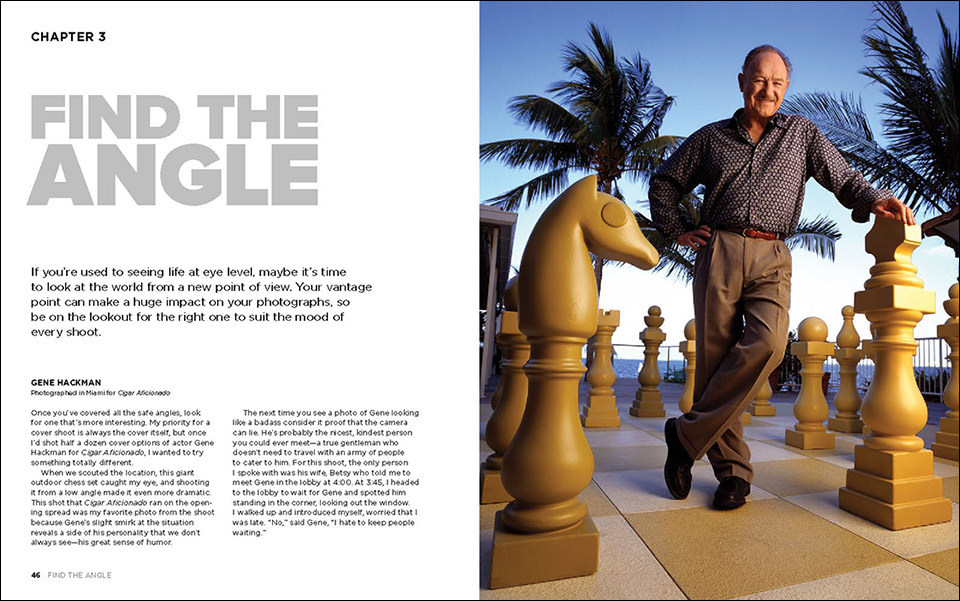
From the book, Secrets of Great Portrait Photography, by Brian Smith.

(Click image to enlarge.)

A little over 20 years ago a Miami Herald photographer named Brian Smith agreed to let me assist him on some of his weekend freelance shoots.

At the paper, Brian was considered a master of location portrait lighting, so getting to tag along with him afforded me the opportunity to learn the basics and fundamentals of lighting set-ups.

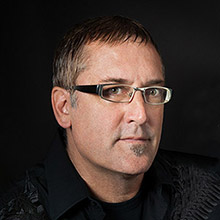
Brian Smith.
Brian left the Herald in 1992. He's now considered one of the country's best editorial and celebrity photographers. Magazine art directors and photo editors hire Brian because they know he'll get "the shot."

Over the past 20 years Brian has photographed some of the world's most recognizable celebrities and powerful business leaders: People who are used to giving orders and not taking them.

Many of his shoots are rigidly scheduled and leave no room for error. On most of his shoots, Brian goes in with a preconceived idea of the picture he wants. But getting pictures of people with over-sized and sometimes fragile egos involve challenges having nothing to do with lighting or the choice of a camera lens.

Many times, Brian has had to deal with harried assistants or pushy publicists, even before he gets to see his subject.

But, there are also the pleasant surprises. Richard Branson was easy..."a photographer's dream subject," says Brian. Actor Gene Hackman: "a true gentleman."

For a shoot with major league baseball's bad boy, Jose Canseco, Brian learned that when "your subject offers you a shot that's better than you'd planned for, take it."

Now, Brian has collected all those stories, and more, in a book that hit store shelves back in September.

In "Secrets of Great Portrait Photography: Photographs of the Famous and Infamous," Brian says he "set out to write the book I wish someone handed me when I was starting out."

This morning Brian told me that his book is more than a book about photography and lighting. It's also a book about "how to sell your ideas," he said.

(Despite his obvious success, Brian hasn't always had great luck selling his ideas. Assigned to shoot golfing great Jack Nicklaus, Brian says Nicklaus walked in and said, "Let's get this over with." And then, Brian writes, "He was gone in 60 seconds.")

Brian is going to be talking about his book this Sunday at the Miami Book Fair.

During our chat this morning Brian told me he'll be talking about how he made some of the shots in the book and what it's like to work with celebrities and powerful people.

And, he told me, "I realize that some in the audience will not be photographers, so I'll also spend some time talking about selling your ideas."

What: ‘Secrets of Great Portrait Photography’ by Brian Smith
When: Sunday, November 18 at Noon
Location: Batten, Room 2106, Building 2, Ground Floor Wolfson Campus, Miami Dade College

Click here for a map to Miami Book Fair.